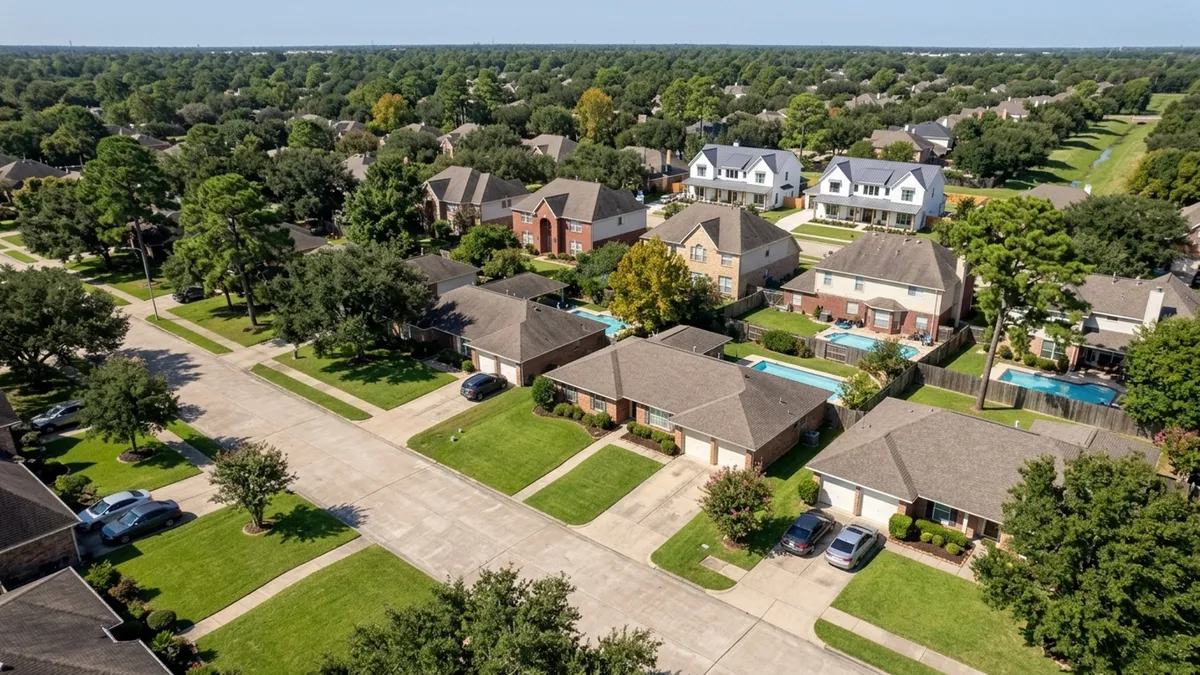
Estimating Seller Closing Costs in Friendswood, TX
If you are selling a home in Friendswood, TX, you will find that local properties are currently selling for a median price of roughly $409,700, and they're spending an average of 27 days on the market. Before you get too attached to that number, though, you need to know how much of it lands in your account after the closing table clears.
Calculating your seller closing costs upfront gives you a realistic picture of your net proceeds. And whether your property sits in the Galveston County or Harris County portion of the city, the fee structure is largely the same either way.
How Closing Costs Impact Your Sale Proceeds
Sellers in Texas typically pay between 6% and 10% of the final sale price in total closing costs, commissions included. Strip out the commissions, and the remaining fees average about 3.26% of the sale price.
That covers the administrative, legal, and professional work required to transfer ownership cleanly. Buyers carry their own separate set of costs - mostly tied to securing a mortgage and funding their escrow reserves - so don't confuse the two sides of the settlement statement.
Subtracting Costs from the Sale Price
Here's one thing sellers often don't realize: you're not writing a check out of pocket on closing day. The title company collects the buyer's funds, subtracts your closing costs, pays off your existing mortgage, and wires whatever's left to you. The costs come out of the proceeds, not your wallet directly.
How Seller and Buyer Expenses Differ
Your job as the seller is to deliver a clear title. That means you're covering the real estate agents, the buyer's owner's title insurance policy, and any outstanding property taxes up to closing day.
The buyer's side is a different list entirely - origination fees, appraisal costs, home inspections, and the initial deposits into their escrow account. Their expenses are loan-driven. Yours are title-driven.
Average Seller Closing Costs in Friendswood
With a median sale price around $409,700, a typical Friendswood seller paying the state average of 6% to 10% is looking at somewhere between $24,582 and $40,970 in total costs. The exact figure swings based on the negotiated commission rate and the specific title fees involved.
One thing worth keeping in mind: as the price goes up, the fixed fees become a smaller slice of the pie even if the total dollar amount rises. Here's what those averages look like at a few different price points.
Costs on a $300,000 Home
On a $300,000 sale, the 3.26% average for non-commission costs runs about $9,780. Add a typical real estate commission and you're looking at a total somewhere between $18,000 and $30,000.
Because the fixed title and escrow fees don't scale as aggressively as commissions do, they represent a larger share of the overall bill at $300,000 than they would on a pricier home.
Costs on Higher-Priced Homes
At $400,000 - right around the current Friendswood median - non-commission costs average about $13,040. Total costs, commissions included, typically fall between $24,000 and $40,000.
At $500,000, plan on roughly $16,300 in non-commission fees, with total closing costs landing somewhere between $30,000 and $50,000 once agent fees are factored in.
Who Pays for What at a Texas Closing
Recent data shows 249 homes sold in Friendswood, and every single one of those transactions required a clear division of fees between buyer and seller. Texas law doesn't mandate a specific split, but local custom is pretty well established - and most buyers and sellers follow it.
The standard Texas real estate contract includes checkboxes for items like the title policy and other specific fees. Everything is technically negotiable, but deviating from regional norms without good reason tends to create friction.
Standard Seller Obligations
On the seller's side, you're customarily covering real estate agent commissions, the owner's title insurance policy, and half of the escrow fees. You'll also pay to record the release of your existing mortgage and cover prorated property taxes through the closing date.
Standard Buyer Obligations
Buyers handle the lender's title insurance policy, the other half of the escrow fees, and the cost to record the new deed. Everything mortgage-related - appraisals, credit reports, loan origination fees - falls on their side of the ledger.
Refusing or Negotiating Fees
You can refuse to pay customary fees. That's your right. But it shifts the cost to the buyer, and in a market where homes are selling for 98.2% of list price on average, buyers have enough options that they may simply walk away rather than absorb the owner's title policy or other traditional seller costs.
The smarter play is usually to negotiate these items during the contracting phase rather than refuse them outright. Agreeing to cover the title policy in exchange for a higher purchase price, for instance, can accomplish the same goal without souring the deal.
Line-by-Line Seller Expenses in Friendswood
The 6% to 10% range isn't a lump sum - it breaks down into specific administrative, legal, and professional fees. Some are regulated by the state; others vary by provider or local tax rates.
Knowing what those individual line items typically look like helps you read your agent's estimated net sheet with a more critical eye before you ever list the property.
Real Estate Agent Commissions
Statewide data from a 2026 survey puts the average total commission at 5.61% to 5.88% of the sale price, typically split roughly evenly between the listing agent and the buyer's agent. On a median $409,700 Friendswood home, a 5.7% total commission comes out to roughly $23,350.
It's the largest single line item you'll see.
The Texas Transfer Tax Exemption
Texas doesn't charge a state or local real estate transfer tax on property sales. A 2016 amendment to the state constitution prohibits it, putting Texas alongside Alaska and Idaho as one of a small group of states that don't levy this tax at all.
That exemption saves Friendswood sellers thousands of dollars compared to sellers in states where transfer taxes are substantial.
Title and Escrow Fees
Title service fees in Texas average around $1,963, or about 0.65% of the sale price. Sellers also customarily pay for the owner's title insurance policy, which protects the buyer from past title defects. That policy is state-regulated and scales with the home's price - for most homes, expect it to run between $1,715 and $3,100.
Prorated Property Taxes and HOA Dues
You're on the hook for property taxes from January 1st through the day you close. The effective rate in the Galveston County portion of Friendswood is about 1.44%; in the Harris County portion, it's roughly 1.48%. The city's own 2024 adopted rate was $0.514172 per $100 of valuation.
If your neighborhood has an HOA, prorated dues get added to the tally as well. The title company calculates the exact daily amounts and deducts them from your proceeds automatically.
Mortgage Payoffs and Buyer Credits
Your existing mortgage balance is paid directly from the sale funds. The title company requests a formal payoff statement from your lender - principal balance plus any interest accrued through closing day.
If you agreed during negotiations to cover any of the buyer's closing costs or provide a repair credit, those seller concessions come out here too.
How to Calculate Your Net Proceeds
Your net proceeds are what's left after subtracting all closing costs and mortgage payoffs from the final sale price. Running a rough calculation before you list tells you whether your expected sale price will generate enough cash for whatever comes next.
It's the same math your title company or agent will run on a formal net sheet once you have a live offer - this just gives you a useful baseline before you get there.
Step-by-Step Net Proceeds Calculation
Start with your target sale price. Multiply by your expected total commission rate to get your agent fees. Then multiply the sale price by 3.26% for your remaining standard closing costs. Subtract both figures from the sale price, then subtract your mortgage payoff balance and the prorated property taxes you owe. What's left is your estimated net.
Handling a Cash Sale
When a buyer pays cash, the timeline speeds up and certain lender-required fees disappear from the buyer's side of the statement. Your costs as the seller, though, stay largely the same - commissions, owner's title policy, prorated taxes. The main practical difference is that cash deals often close faster, which slightly reduces the accrued daily mortgage interest and prorated taxes you owe at settlement.
Ways to Lower Your Closing Bill
About 15% of homes in Friendswood have recently sold above list price, which gives those sellers a bit more leverage to negotiate fees. You can't avoid closing costs entirely, but you do have real options for trimming the total.
Negotiating Commissions and Concessions
Commissions aren't fixed by law. You can negotiate the rate before you sign a listing agreement, and that conversation is the most direct path to reducing your largest closing expense.
On the concessions side, with just 2.6 months of housing supply in the market, you're less likely to find yourself needing to offer buyer credits just to attract a strong offer. Don't give away leverage you haven't been asked to give.
Limits on Buyer Contributions
If a buyer asks you to contribute toward their closing costs, their lender will cap how much you can provide. FHA, VA, and conventional loan programs all carry binding limits on seller concessions, tied to the purchase price and the buyer's down payment. Factor those program caps into your counteroffers when a buyer requests cost assistance.
Shopping for Title Services
Texas regulates title insurance premiums, but the escrow and settlement fees that title companies charge on top of those premiums can vary. You or your agent can request fee estimates from multiple local providers and compare them. It won't move the needle as dramatically as negotiating your commission, but it's a legitimate way to avoid overpaying for the administrative side of the closing.
Frequently Asked Questions About Friendswood Closing Costs
What are the typical closing costs on a $300,000 house in Friendswood?
A seller can expect to pay roughly $9,780 in non-commission fees on a $300,000 home, based on the Texas average of 3.26%. When you add standard real estate commissions, the total cost typically ranges from $18,000 to $30,000.
Is there a sales or transfer tax on a home sale in Texas?
No. Texas does not charge a state or local real estate transfer tax on property sales. A 2016 state constitutional amendment prohibits this tax.
Can a seller refuse to pay or negotiate closing costs?
Yes. Sellers can refuse to pay customary fees, but this shifts the cost to the buyer. You can negotiate these terms in the purchase contract, though refusing to pay standard items like the owner's title policy may deter buyers.
How much can a seller contribute toward the buyer's closing costs?
Seller contributions are capped by the buyer's specific mortgage program. Conventional, FHA, and VA loans all place binding limits on seller credits, usually tied to a percentage of the purchase price and the buyer's down payment.
Who typically pays for the owner's title policy in a Friendswood real estate transaction, the buyer or the seller?
The seller customarily pays for the owner's title insurance policy in Texas. This policy protects the buyer from past title defects and usually costs between $1,715 and $3,100 depending on the home's price.
What are the most effective ways for a seller to reduce their closing costs in Friendswood, TX?
The most effective ways are negotiating the real estate commission rate before listing and minimizing buyer concessions during the sale. Sellers can also compare administrative and escrow fees among different local title companies.